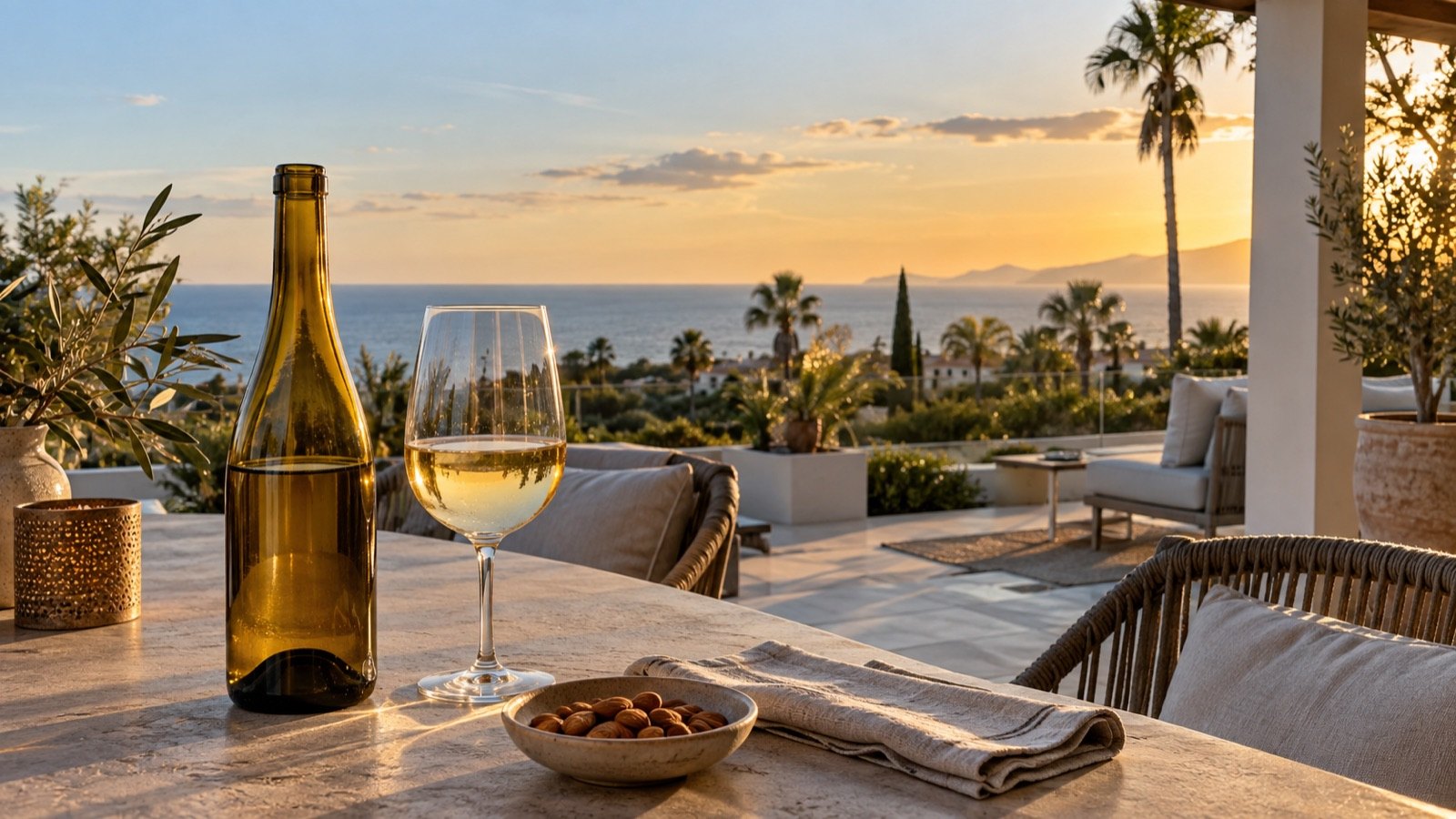
This guide highlights five Málaga wines worth knowing in 2026, from Manilva, Ronda and the Axarquía. It explains what makes each wine distinctive, suggests food pairings, links directly to the wineries for visits and technical details, and points readers to specialist shops near Marbella and Estepona where local references may be found.
Málaga wines are more varied than their reputation suggests
These Málaga wines come from several distinct wine landscapes. Manilva, Ronda and the Axarquía sit within the wider world of the Málaga and Sierras de Málaga denominations of origin, but they do not taste alike. Altitude, soils, proximity to the sea and grape varieties make the difference.
This is not a scored list or a substitute for a personal tasting. It is an editorial starting point, based on current producer information, declared vintages and wines available through the wineries themselves. The suggested food pairings are intended as useful occasions for opening a bottle, rather than rigid rules.
For a broader guide to planning a day out, see our guide to wineries to visit in Málaga Province. The focus here is narrower: five wines that reveal why the province deserves a place on the table as well as on the itinerary.
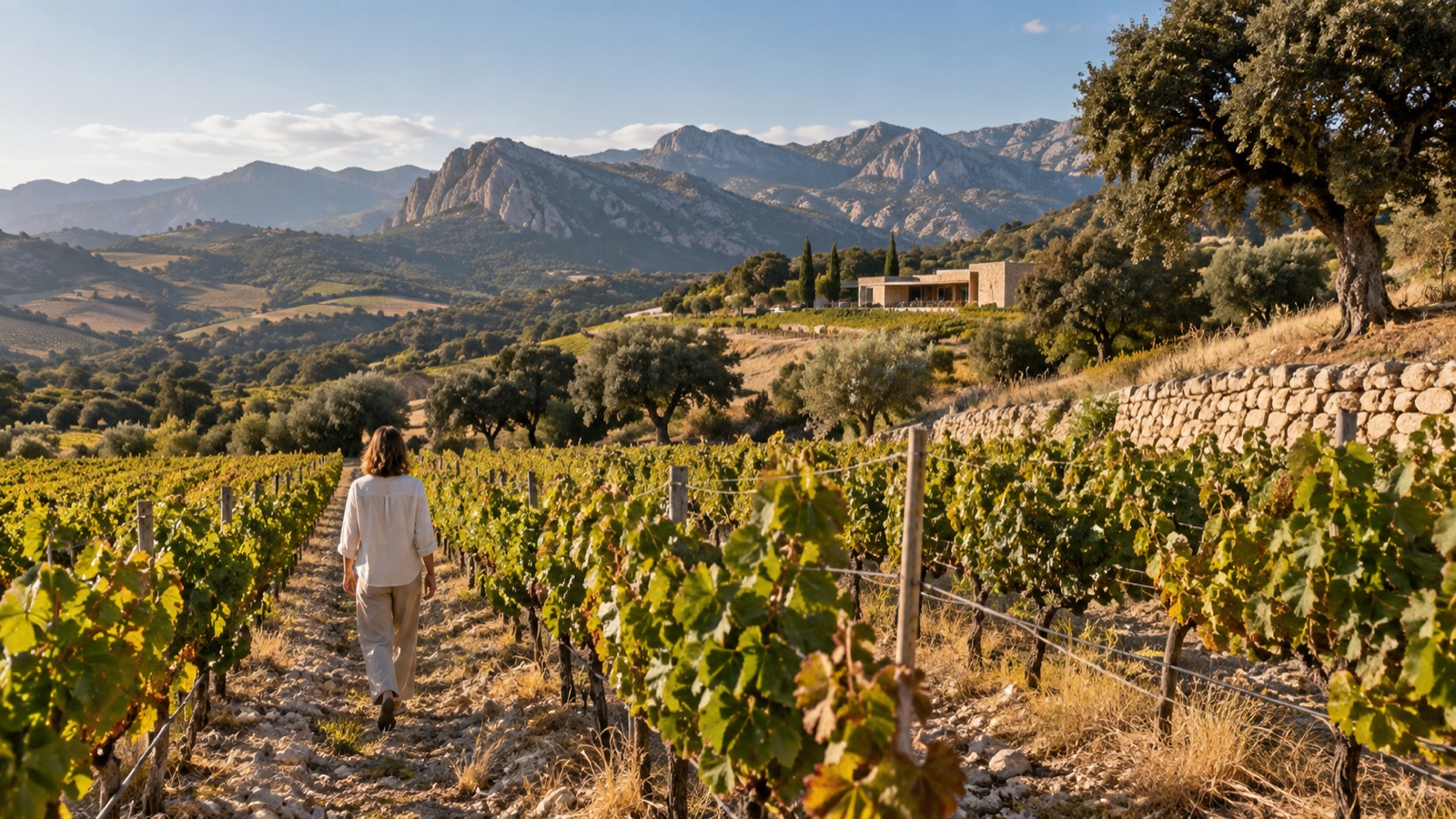
Five Málaga wines worth knowing
Nilva Original 2024, Manilva
Nilva turns Moscatel de Alejandría, a grape better known locally for sweet wine, into a dry white with fine-lees ageing. The 2024 vintage comes from old, dry-farmed Manilva vineyards near the Mediterranean and is produced in a limited run of 2,817 bottles.
Open it with: grilled fish, shellfish, rice dishes or a relaxed lunch on the terrace. The winery itself also suggests oriental cooking, steak tartare and carpaccio. Serve well chilled.
Read Nilva Original’s current technical details. If the wine prompts a detour west, Nilva offers visits to its vineyard, winery and CIVIMA wine centre in Manilva.
Payoya Negra 2022, La Melonera, Ronda
La Melonera has built its work around the recovery of Andalusian grape varieties. Payoya Negra is its flagship red, made from Tintilla de Rota, Rome and Syrah, then aged for 12 months in French oak foudres. Its name nods to the Payoya goat of the Serranía de Ronda and Sierra de Cádiz.
Open it with: roast lamb, aubergine dishes with depth, or mature goat’s cheese. It is the sort of bottle that suits a cooler evening and a table that is in no hurry.
See Payoya Negra’s producer notes. La Melonera offers bookable winery visits, tastings and estate experiences, including a classic tour in English and Spanish.
Pago El Espino 2024, Cortijo Los Aguilares, Ronda
At more than 900 metres above sea level, Cortijo Los Aguilares is one of the names that has helped define contemporary Ronda wine. Pago El Espino 2024 blends Petit Verdot, Syrah and Tempranillo, with 15 months in French oak. The current release is a useful introduction to the estate’s more structured red wines.
Open it with: a rib of beef, slow-cooked lamb or a well-made mushroom dish. Give it time at the table rather than treating it as an immediate aperitif.
Read the current Pago El Espino technical profile. Visits at Cortijo Los Aguilares range from a straightforward tasting to picnics and walks through the estate, all by advance reservation.
DV, Descalzos Viejos, Ronda
Descalzos Viejos is as memorable for its setting as for its wines. The estate occupies a restored former Trinitarian convent below the Tajo de Ronda. DV is its younger red, made from Garnacha, Syrah and Merlot, with six months in barrel. It offers an accessible way into the house style without making the evening feel too formal.
Open it with: roast chicken, chargrilled vegetables, Iberian pork or a simple supper built around good produce. Its role is not to dominate the meal, but to make it feel more considered.
Explore DV at Descalzos Viejos. The winery runs small-group visits and tastings in English and Spanish; check availability directly before travelling.
Ariyanas Naturalmente Dulce, Bodegas Bentomiz, Axarquía
A complete Málaga wines selection should make room for sweetness, without treating it as an afterthought. Bentomiz’s Ariyanas Naturalmente Dulce is an unfortified Moscatel de Alejandría from the Axarquía, served cool. The producer describes it as fresh and mineral, with sweetness balanced by acidity.
Open it with: almond cake, citrus desserts, apricot or peach dishes. It also works as a small, chilled aperitif when the occasion calls for something more unusual than sparkling wine.
Read the producer’s notes for Ariyanas Naturalmente Dulce. Before planning a visit, consult Bodegas Bentomiz directly for its current restaurant and wine-tourism programme.
How to turn a bottle into a day out
For Málaga wines, Ronda rewards an unhurried visit. La Melonera, Cortijo Los Aguilares and Descalzos Viejos each offer a different lens on the landscape, from native-variety research to vineyard walks and historic architecture. Manilva, meanwhile, is a more immediate link from the New Golden Mile: a short journey for anyone curious about the Moscatel vineyards that have shaped the western edge of Málaga Province.
Book directly with the winery, particularly at harvest time and weekends. Programmes, languages, minimum group sizes and seasonal opening hours can change, so the producer is always the most reliable source for the final arrangements.
What makes these wines distinctive: The province brings together contrasts that are unusual in one area. In Manilva, sea breezes and clay-and-albariza soils help Moscatel de Alejandría retain freshness. Ronda’s high-altitude vineyards —many above 700 metres— have cold nights and a wide day-to-night temperature range, supporting reds with balanced acidity and ripeness. In the Axarquía, steep slate slopes and hand harvesting explain both the concentration of Moscatel and the mineral character of its sweet wines.
How to read the label: “Málaga” and “Sierras de Málaga” are not interchangeable. The first mainly covers traditional sweet styles and naturally sweet wines; “Sierras de Málaga” identifies still wines that may be dry or semi-dry. Check the vintage and grape variety too: a dry Moscatel from Manilva behaves very differently at the table from a sweet Moscatel from the Axarquía.
A practical route from the coast: For a day trip, Manilva is the closest stop from Estepona and the New Golden Mile. Ronda takes longer by road but allows you to combine two wineries with the old town and a mountain lunch. Book one tasting in the morning and one in the afternoon so you can drive calmly and compare altitude, soil and grape variety with a clear palate.
Frequently asked questions about Málaga wines
Which Málaga wine is best for a first bottle?
Choose Nilva Original if you prefer fresh, dry whites. Payoya Negra is a clear introduction to Ronda’s recovered varieties and structured reds. Ariyanas Naturalmente Dulce is the natural starting point if you want the sweet style historically associated with Málaga.
Can the wineries be visited year-round?
Many welcome visitors by advance booking, but opening hours change during harvest, winter and public holidays. Confirm language, duration, accessibility and cancellation terms directly with the winery before travelling.
Where can you buy Málaga wines near Estepona?
The most reliable option is to buy at the winery during a visit. For a wider selection, ask specialist shops in Marbella, Estepona and Málaga city for current vintages from Manilva, Ronda and the Axarquía, rather than only traditional sweet wines.
A local cellar does not need to be large
A few well-chosen Málaga wines can do more than fill a rack. These Málaga wines also give a dinner an origin story, make a useful house gift and provide a reason to explore a part of the province beyond the coast. Start with the style you naturally enjoy, white, red or sweet, then let the winery visit add the rest of the story.
Register today to our Guadalmansa Insider Newsletter and get all the latest updates & news about the Guadalmansa area in your inbox.
About the author: Livingstone Estates Real Estate is a Costa del Sol property and lifestyle team with local knowledge of Málaga Province, its communities, gastronomy and wine tourism. This guide was researched and reviewed by the Livingstone Estates editorial team.
Editorial method: Producer technical pages and visit information were checked for this guide; vintages and availability can change, so readers should confirm final details directly with each winery.
Editorial disclosure: This article and its illustrative images were prepared with the assistance of Artificial Intelligence and reviewed, edited and approved by the Livingstone Estates team.
Image disclosure: The images accompanying this article were created using Artificial Intelligence for illustrative purposes.