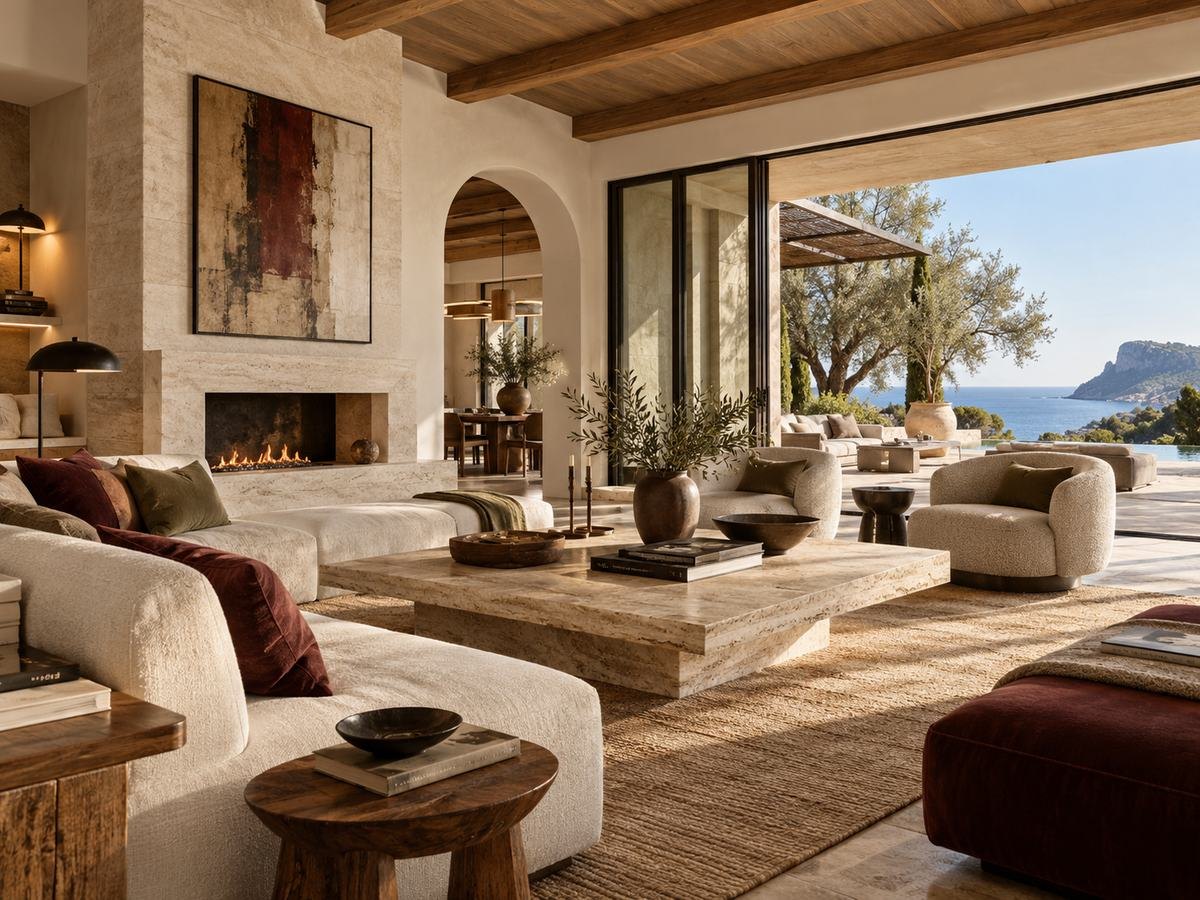
Design & Interiors
Interior Design Trends 2027: What's Defining the World's Finest Homes
There is a particular kind of room that looks expensive in a photograph yet feels strangely anonymous in person. Every surface has been carefully coordinated, every piece of furniture seems to belong to the same collection, and nothing appears to have found its place by accident. For several years, this polished uniformity became a familiar visual language in high-end residential design, particularly in newly built properties. As 2027 approaches, however, a more individual approach is gaining ground, with architects and interior designers placing renewed emphasis on craftsmanship, expressive materials and the personal character that makes a home memorable.
The Direction of Interior Design in 2027
The developments likely to influence luxury interiors in 2027 have been gathering momentum for some time. Across international design fairs, private residential projects and the collections of leading furniture manufacturers, there is a growing interest in spaces that feel less predetermined and more closely connected to the people who inhabit them. This shift does not necessarily represent a rejection of contemporary minimalism, but rather a desire to give carefully composed interiors greater depth, warmth and individuality through the thoughtful selection of materials, furniture and decorative elements.
At Salone del Mobile 2026, as reported by Wallpaper*, lacquered furniture structures, sculptural dining tables and increasingly elaborate wall treatments emerged as recurring design directions. Meanwhile, Architectural Digest's coverage of High Point Market in autumn 2026 highlighted richly figured timber, artisanal details, burnished metals and colours inspired by the natural world. Although these observations cannot determine precisely what every interior will look like in the coming year, they provide a revealing picture of the ideas currently attracting attention within the international design community.
What makes this evolution particularly interesting is the freedom it offers. A contemporary residence no longer needs to adhere to a single, narrowly defined aesthetic to feel sophisticated. Architectural restraint can coexist with expressive furniture, antique objects or a confident use of colour, provided the composition remains balanced. For owners of exceptional homes, the opportunity lies in creating interiors that reflect individual taste while preserving the architectural qualities that made the property appealing in the first place.
Interiors with a Sense of Identity
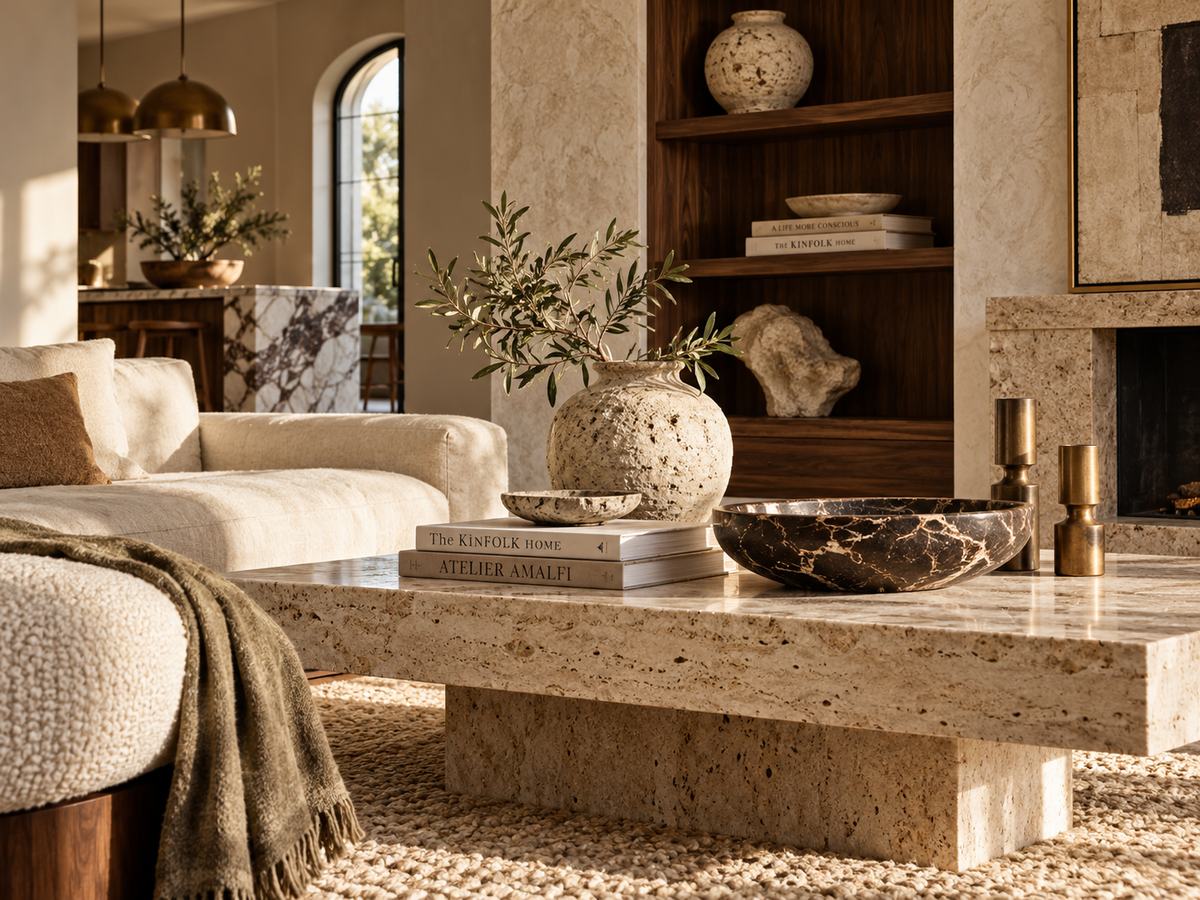
Some of the most compelling residential interiors are those that appear to have developed naturally over time. A twentieth-century Italian chair might sit beside a contemporary marble table, while an antique cabinet inherited from a previous generation finds a new purpose in an otherwise modern room. Books, works of art and objects acquired during travels contribute to the atmosphere without demanding attention individually, creating a space whose character cannot easily be reproduced elsewhere. What matters is not the age or provenance of every object, but the relationships established between them and the architecture.
This appreciation for personal collections and carefully sourced pieces is reflected in the growing interest in what Homes & Gardens identifies in its 2027 design forecast as 'found luxury'. Rather than furnishing a residence exclusively with coordinated new collections, designers are exploring combinations of vintage furniture, contemporary craftsmanship and objects with personal significance. The result can be particularly effective in newly completed homes, where an older piece introduces visual contrast and a sense of continuity that new architectural finishes alone cannot provide.
Creating this impression requires considerable judgement, however, because an interior filled with expensive or unusual objects is not necessarily an accomplished one. Proportion, placement and the relationship between different materials remain fundamental, and some pieces benefit from having generous space around them. A single outstanding artwork or beautifully crafted chair may bring more character to a room than an elaborate arrangement of decorative accessories. The objective is not to make every object remarkable, but to create an environment in which the different elements contribute to a coherent and personal whole.
Materials with Character: Stone, Timber and the Beauty of Imperfection
Natural materials have long been associated with luxury residential architecture, although the way they are being selected and combined is changing. Instead of relying on uniformly pale marble, highly polished finishes and perfectly consistent timber surfaces, designers are increasingly drawn to materials whose natural variations contribute to their appeal. Strongly veined marble, porous travertine, richly figured walnut and hand-finished plaster introduce subtle irregularities that give surfaces their own identity. These qualities become especially noticeable in interiors where furniture and decoration have been kept deliberately restrained, allowing the materials themselves to provide much of the visual interest.
Stone as an Architectural Feature
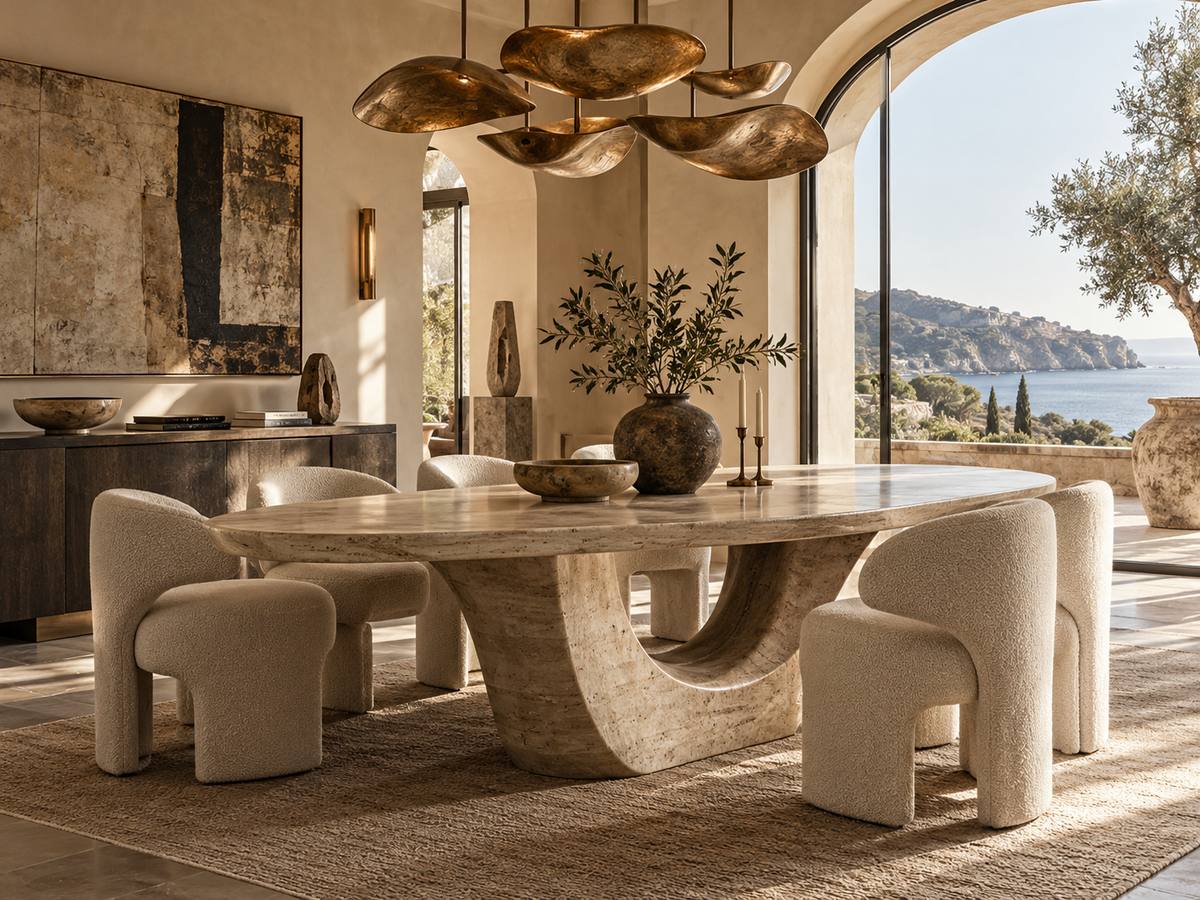
Stone is moving beyond its traditional applications in kitchens and bathrooms to become a more prominent architectural element throughout the home. A fireplace clad in richly veined marble can establish the character of an entire sitting room, while a substantial travertine dining table introduces both sculptural presence and a tactile quality that changes with the light. Integrated stone shelving, bespoke basins and carefully detailed wall cladding offer further opportunities to use the material in ways that feel integral to the building rather than simply decorative.
The finish is often as important as the stone itself. Honed limestone creates a softer, more understated effect than polished marble, while textured surfaces respond differently to changing daylight, revealing variations that may otherwise go unnoticed. In Mediterranean properties, where strong natural light is a defining architectural feature, these distinctions become particularly relevant. Material selection should nevertheless extend beyond appearance, taking account of porosity, maintenance requirements and the suitability of individual surfaces for everyday use.
Timber with a Stronger Presence
Richly figured timber is also returning to prominence, particularly in bespoke cabinetry, architectural joinery and furniture designed specifically for a residence. Walnut, dark oak and expressive veneers can introduce warmth and depth into contemporary spaces without compromising their clean architectural lines. A timber-lined library, for example, offers an atmosphere entirely different from an open-plan living room finished in pale stone, creating a natural distinction between areas intended for entertaining and those reserved for reading, working or quiet conversation. As with stone, the quality of craftsmanship and detailing ultimately determines whether these materials feel genuinely luxurious or merely expensive.
When Furniture Becomes Architecture
Furniture is taking on a more architectural role in contemporary residential design, with individual pieces increasingly conceived as important components of the spatial composition. At Milan Design Week 2026, sculptural tables, expressive seating and furniture incorporating contrasting structural elements demonstrated how designers are moving beyond the conventional distinction between functional objects and decorative statements. These pieces are intended to influence the experience of a room through their proportions, silhouettes and relationship with the surrounding architecture, rather than simply occupy a predetermined position within it.
A dining table with a substantial carved stone base, for instance, can become the defining element of a room, particularly when paired with restrained seating and carefully positioned lighting. Similarly, a sculptural armchair may introduce a sense of movement into an otherwise rectilinear interior, creating a point of visual interest without requiring additional ornamentation. In larger residences, where generous ceiling heights and open-plan layouts offer considerable freedom, these objects can establish more intimate areas within expansive living spaces while maintaining a sense of openness.
Yet the success of sculptural furniture depends on more than its visual impact. A table that looks remarkable in a showroom may prove inconvenient in daily use, while an oversized chair can disrupt the proportions of a beautifully balanced room. Seating comfort, circulation, sightlines and the relationship between individual pieces all deserve careful consideration. Some of the most accomplished interiors use a single distinctive object as a focal point, allowing the surrounding furniture to support rather than compete with it.
A Richer Approach to Colour
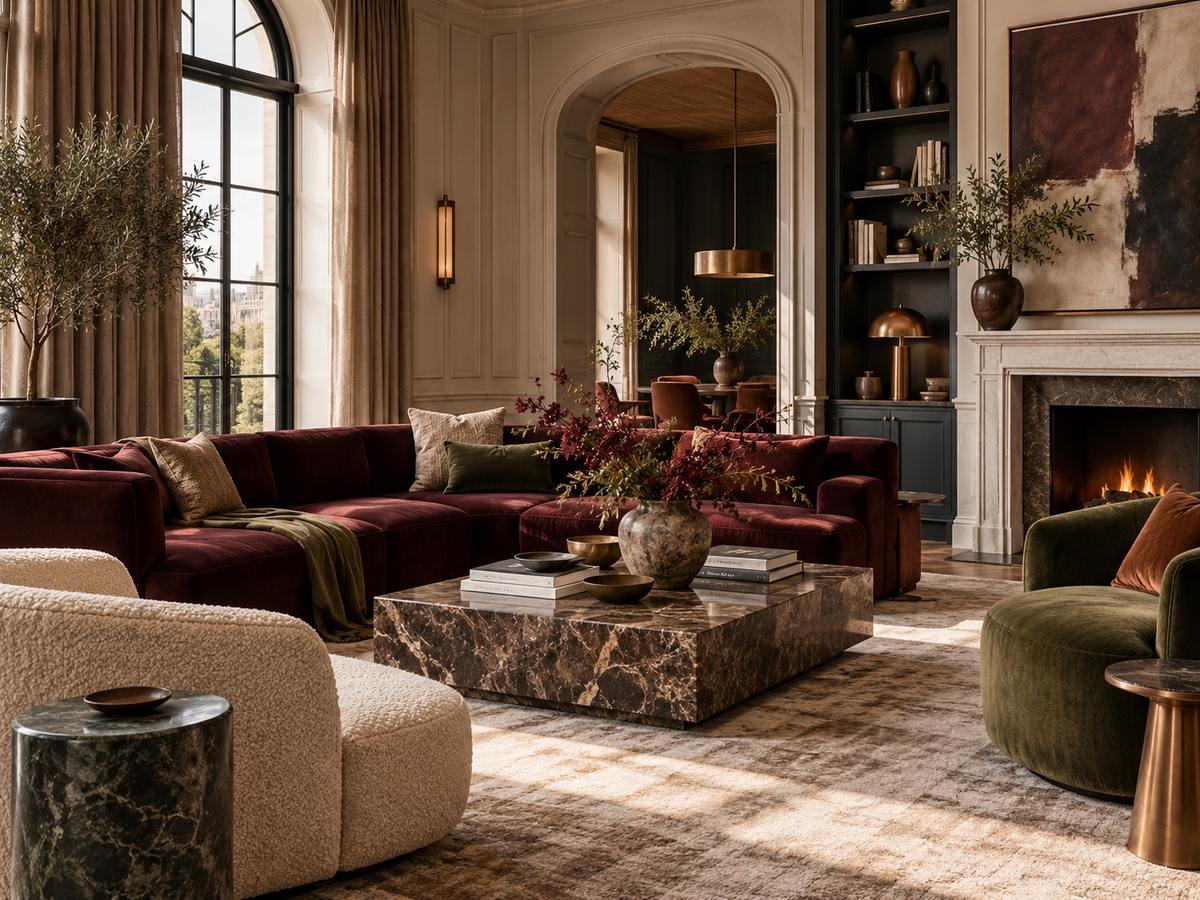
White, ivory and sand have an enduring place in Mediterranean architecture, where they respond beautifully to natural light and create a calm setting for art and furnishings. Their appeal is unlikely to disappear, although the near-universal reliance on pale neutral interiors is increasingly being challenged by more expressive colour schemes. Chocolate brown, burgundy, deep teal, olive and muted terracotta are bringing warmth and complexity to contemporary spaces, appearing in upholstered furniture, wall finishes, bespoke joinery and carefully selected decorative elements.
In its analysis of emerging colour directions, Wallpaper* highlighted chocolate, burgundy and deep teal among the tones influencing residential interiors. Their presence in recent collections suggests that richer palettes may continue to develop through 2027, although the most successful applications are likely to depend less on following a particular colour trend than on understanding how individual tones interact with the architecture and materials of a home.
In a sophisticated residence, introducing colour does not necessarily mean covering every surface in a dramatic shade. A deep wine-coloured sofa against pale limestone can provide an elegant focal point, while dark olive upholstery, walnut cabinetry and warm bronze lighting may establish a more intimate atmosphere in a library or private sitting room. The contrast between light and dark, matt and reflective, or smooth and textured surfaces often contributes more to the overall composition than the colour itself.
Natural light is especially important when developing a palette for a property in southern Spain. A muted colour selected in a London showroom may appear considerably brighter under the Mediterranean sun, while darker finishes can acquire unexpected warmth during the late afternoon. Testing materials, fabrics and paint samples in the property itself, at different times of day, remains essential before making permanent decisions. The objective is to create an interior that feels coherent throughout the day rather than one designed to look convincing under a single set of photographic conditions.
The Return of Decorative Surfaces
After years in which walls were often treated as discreet backgrounds, designers are rediscovering their architectural and decorative potential. Hand-finished plaster, fluted timber, ceramic installations, upholstered panels and richly textured wall coverings are being used to introduce depth and individuality into residential interiors. This renewed interest does not necessarily imply a return to elaborate decoration throughout the home; in many cases, a carefully considered treatment on one wall is enough to alter the character of an entire room.
Architectural Digest's professional design forecast has documented the growing interest in sculptural wall treatments, artisanal details and bespoke decorative finishes. Their appeal lies partly in the craftsmanship involved, but also in the subtle variations that distinguish handmade surfaces from mass-produced alternatives. A ceramic installation, for example, may reveal differences in texture and glaze that become more apparent as the light changes, creating a visual experience that is difficult to reproduce with a completely uniform finish.
In a contemporary Mediterranean residence, these ideas can be interpreted through locally appropriate materials and architectural techniques. A textured plaster wall might provide a beautiful background for an important artwork, while bespoke ceramic tiles could introduce character into a guest bathroom without overwhelming the overall design. Timber screens and detailed joinery offer another possibility, particularly when used to create subtle divisions between different areas of an open-plan property. The strongest results tend to emerge when decorative surfaces are considered during the architectural planning process rather than introduced as an afterthought.
The Sensory Dimension of Luxury Design
Architecture and interior design are experienced through considerably more than appearance, although photographs inevitably emphasise the visual qualities of a space. The way daylight enters a room, the sound of footsteps on a particular floor, the comfort of a chair and the degree of privacy between different living areas all influence how a home feels to its occupants. As the understanding of residential wellbeing becomes more sophisticated, these less immediately visible considerations are assuming a more prominent role in high-end design.
Lighting Beyond Illumination
Thoughtful lighting design is central to this experience, particularly in properties with extensive glazing and strong natural daylight. A room that feels open and inviting during the afternoon may require an entirely different lighting arrangement in the evening, when architectural illumination, table lamps and decorative fixtures establish a softer and more intimate atmosphere. Rather than relying on uniformly bright recessed lighting, designers can introduce several complementary sources, allowing individual spaces to accommodate reading, entertaining or relaxation without changing their physical arrangement.
Sound, Acoustics and Private Spaces
Another interesting development emerged at Milan Design Week 2026, where sound and the spaces created around it received considerable attention. Wallpaper* explored the relationship between sound and contemporary interiors, including dedicated listening rooms, audio furniture and environments designed around the experience of music. These ideas are particularly relevant to larger residences, where private libraries, music rooms and intimate sitting areas can offer a welcome alternative to accommodating every activity within one expansive open-plan space.
Acoustic comfort also deserves consideration in contemporary homes dominated by stone floors, large glazed surfaces and high ceilings, all of which can influence how sound travels through a room. Carefully selected upholstery, rugs, curtains and specialist acoustic treatments may improve the experience without compromising the architectural design. In a well-planned residence, the balance between spacious entertaining areas and quieter private rooms allows different activities to take place comfortably at the same time.
Wellness as Part of Everyday Living
The growing interest in wellbeing is also affecting the organisation of high-end homes, with greater attention given to spaces intended for exercise, recovery and relaxation. Private gyms, saunas and quiet rooms are most successful when integrated into the overall architecture, with appropriate ventilation, natural light and privacy. Their value lies in how naturally they fit into daily routines rather than in the number of facilities included, since even a modest, beautifully proportioned room can contribute considerably to the experience of living in a property when it has been designed around a clear purpose.
A Mediterranean Interpretation: Designing for the New Golden Mile
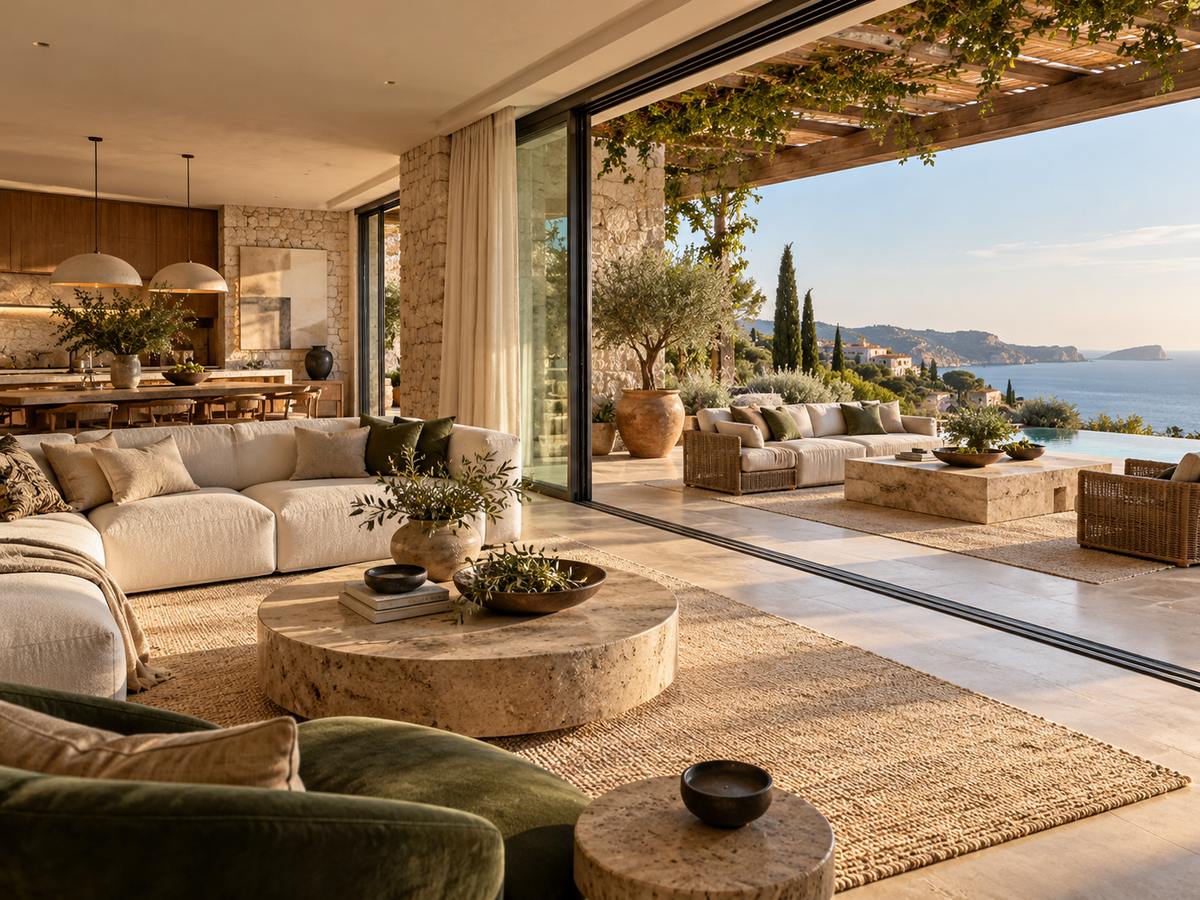
International design movements become particularly interesting when interpreted through the architecture, climate and cultural identity of a specific location. An interior conceived for a historic Parisian apartment will respond to very different conditions from those found in a contemporary Mediterranean villa, where generous terraces, expansive glazing and the relationship between indoor and outdoor spaces often play a defining role. For owners and buyers on the New Golden Mile, the challenge is therefore not to reproduce an international aesthetic without alteration, but to consider how emerging ideas can complement the qualities of the local architecture.
Across Estepona East and the New Golden Mile, contemporary residences frequently place considerable emphasis on natural light, open-plan living and direct access to terraces and gardens. These characteristics provide an excellent foundation for the richer materials, carefully selected furniture and more personal interiors gaining prominence internationally. A sculptural dining table, for example, may work particularly well in a spacious room overlooking a terrace, while textured limestone, walnut joinery and carefully chosen artwork can introduce character without diminishing the openness of the architecture.
Connecting Indoor and Outdoor Living
The relationship between interior and exterior spaces is especially important in southern Spain, where outdoor areas can form an integral part of residential life throughout much of the year. Achieving a convincing transition requires more than installing large sliding doors, however, as flooring materials, shading, furniture placement and lighting all influence whether the terrace feels like a natural extension of the home. Covered dining areas, sheltered seating and carefully designed outdoor illumination can create a sequence of spaces that remain comfortable at different times of day and during changing seasonal conditions.
Material selection must also respond to the local environment. Stone finishes, timber treatments, metalwork and exterior upholstery should be considered in relation to intense sunlight, moisture and regular use, particularly in properties close to the sea. Although it may be tempting to use identical materials throughout indoor and outdoor areas, a more considered approach often involves selecting finishes that complement one another while meeting the practical requirements of each setting.
Architecture Before Decoration
The diversity of residential architecture in the area also calls for different approaches to furnishing and decoration. A contemporary beachfront apartment may benefit from a relatively restrained palette and a small number of exceptional pieces, allowing the views and natural light to remain prominent, whereas a detached villa with generous proportions may comfortably accommodate richly finished private rooms, a substantial art collection or more expressive furniture. Neither approach is inherently more luxurious; the determining factor is whether the design responds convincingly to the building and the way its owners intend to use it.
For those considering a property in the area, the Livingstone Estates collection of homes in Estepona East provides an introduction to different architectural styles, residential settings and types of accommodation, from beachfront apartments to contemporary villas. Looking beyond the existing decoration to evaluate proportions, orientation, natural light and the relationship between living spaces is often the most valuable starting point, particularly for buyers planning to create an interior that reflects their own taste.
Designing Beyond the Trend Cycle
While the arrival of a new design season offers an opportunity to discover different materials, colours and forms, a well-considered interior should not become obsolete simply because tastes change. This is particularly relevant in exceptional residences, where significant investment in architectural finishes, bespoke joinery and specialist craftsmanship calls for a longer-term perspective. Some elements, such as upholstery, decorative lighting and movable furniture, can be updated relatively easily, while others, including flooring, kitchens, bathrooms and architectural alterations, require a more permanent commitment.
Distinguishing between these decisions allows a property to evolve without repeatedly altering its fundamental character. A beautifully proportioned room with carefully selected natural materials can accommodate different furniture and colour schemes over many years, while good lighting, practical circulation and high-quality construction remain valuable regardless of changing decorative preferences. This does not mean avoiding contemporary design, but rather considering where a distinctive feature will continue to contribute to the home and where a more adaptable solution might be preferable.
The same principle is worth remembering when purchasing a property. An interior may be beautifully presented, yet the qualities that ultimately determine its suitability are often those that cannot easily be changed through decoration. Natural light, privacy, orientation, ceiling heights, room proportions and the relationship between interior and outdoor spaces all deserve careful attention, particularly when the intention is to own and enjoy the property over many years. Buyers considering renovations should also take account of maintenance requirements, community regulations and any permissions necessary before carrying out substantial alterations.
What Will Define the Finest Homes in 2027?
The design directions emerging for 2027 point towards a more individual interpretation of luxury, where craftsmanship, material quality and personal expression are given greater importance than adherence to a particular decorative formula. Richer colours, sculptural furniture and distinctive surfaces may provide the most immediately recognisable visual changes, but the more meaningful evolution lies in the attention being paid to how people experience their homes. Comfort, privacy, acoustics, natural light and the relationship between different living areas are increasingly considered alongside the aesthetic qualities of the interiors.
Ultimately, the most successful homes will not be defined by the number of fashionable elements they contain, but by the confidence with which those elements have been selected and combined. An exceptional residence should feel coherent without being predictable, sophisticated without appearing excessively staged, and sufficiently personal to retain its character long after the current design season has passed. The finest interiors have always achieved this balance, even as the materials, furniture and decorative influences surrounding them continue to evolve.
Frequently Asked Questions About Interior Design Trends 2027
What are the main interior design trends for 2027?
The principal directions emerging for 2027 include more personal and layered interiors, expressive natural materials, sculptural furniture, richer colour palettes and a renewed appreciation for artisanal craftsmanship. There is also growing interest in residential spaces designed around comfort, acoustic quality and everyday experience, reflecting a broader understanding of luxury that extends beyond appearance. These developments are based on trends observed during 2026 and early forecasts for the following year, rather than confirmed outcomes.
What colours are expected to influence luxury interiors in 2027?
Chocolate brown, burgundy, olive, muted terracotta and deep blue-green tones are among the colours attracting attention in contemporary residential design. Their appeal lies partly in the warmth and depth they can introduce when combined with stone, timber and natural textiles, although the suitability of any palette depends on the architecture and natural light of the individual property. Warm neutrals are also likely to remain important, particularly as a background for more expressive furniture and decorative elements.
Is minimalist interior design going out of fashion?
Minimalism continues to play an important role in contemporary architecture, particularly in residences where proportions, natural light and carefully selected materials provide much of the visual interest. What appears to be changing is the preference for interiors that feel excessively uniform or lack personal character. A restrained interior can still incorporate expressive stone, distinctive furniture, artwork and craftsmanship without losing the clarity and sense of space that make minimalist design appealing.
How can 2027 interior design trends be adapted to Mediterranean homes?
In Mediterranean residences, emerging design directions work best when interpreted through the architecture, natural light and relationship between indoor and outdoor spaces. Materials such as limestone, travertine and timber can provide a connection to the surrounding environment, while carefully selected colours, furniture and artisanal details introduce individuality without overwhelming the architecture. Particular attention should be paid to sunlight, material durability, shading and the practical use of terraces throughout the year.
Which interior design choices are most suitable for long-term ownership?
High-quality materials, careful workmanship, balanced room proportions and adaptable layouts generally offer greater longevity than decorative schemes based entirely on current fashion. Owners can introduce emerging trends through furniture, textiles, lighting and art while keeping more permanent architectural decisions focused on comfort, functionality and durability. This approach allows an exceptional home to develop its character over time without requiring frequent major alterations.